| Images not showing? View on the web 한국어 | ||||||||||||||||||
 | ||||||||||||||||||
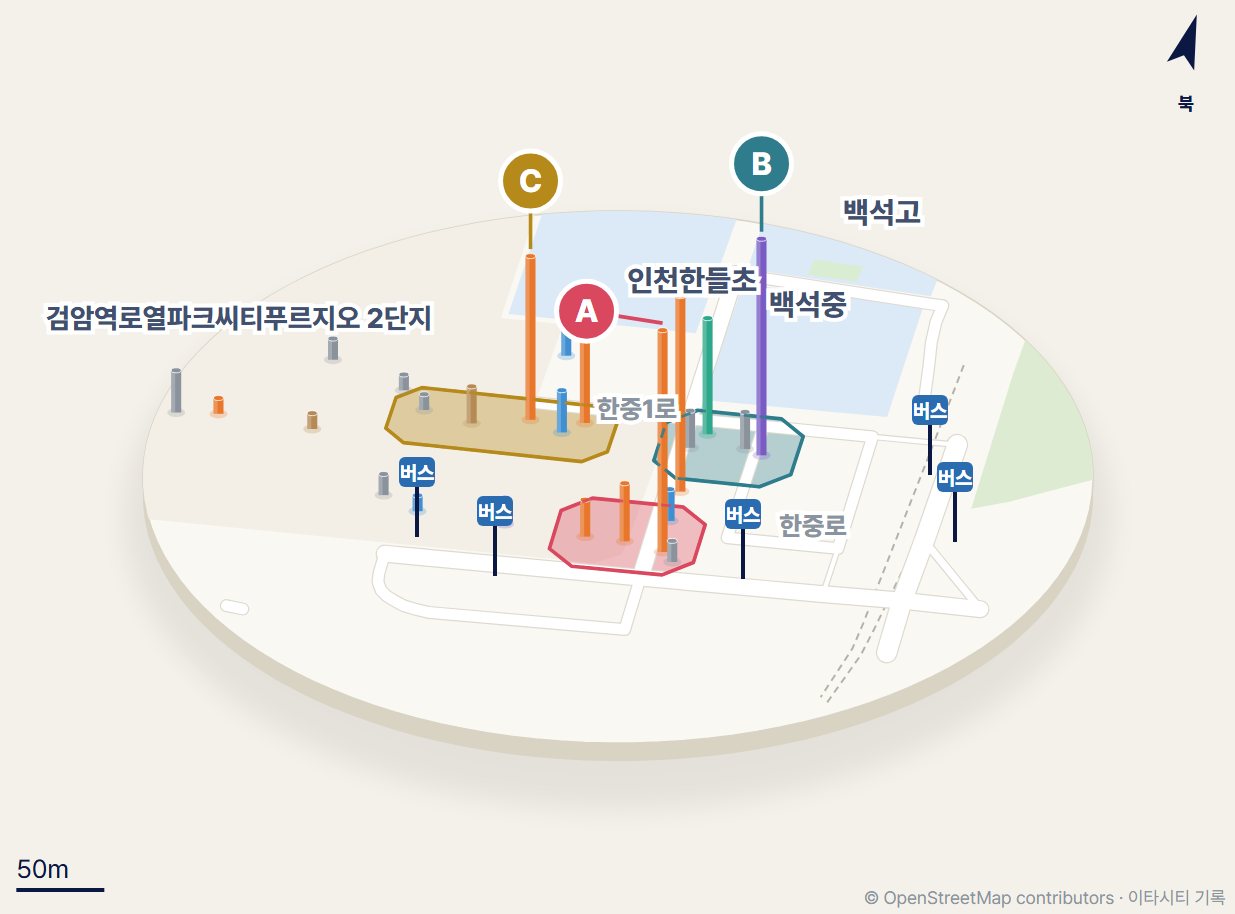 | ||||||||||||||||||
 Most cigarette butts here Most cigarette butts here Most plastic bags here Most plastic bags here Most paper here Most paper here Most cans here Most cans here Most Styrofoam here Most Styrofoam here Most other items here (plastic, PET bottles, etc.) Most other items here (plastic, PET bottles, etc.) | ||||||||||||||||||
The whole school neighborhood of Baekseok-dong, Incheon | ||||||||||||||||||
Green Action Challenge × News from Yeonhui Youth Center | ||||||||||||||||||
A new neighborhood's first cleanup record, | ||||||||||||||||||
This issue tells the story of a participant from Yeonhui Youth Center | ||||||||||||||||||
September 28 to October 1, 2026 | ||||||||||||||||||
 | ||||||||||||||||||
Hello! Here is news from Green Action, part of the World Cleanup Day award program. | ||||||||||||||||||
This story comes from Baekseok-dong, Incheon. From September 28 to October 1, one participant from Yeonhui Youth Center went out three times and picked up 243 pieces of litter on the roads in front of three schools. The apartments and schools here are new, so this is the first cleanup record for these roads.1 | ||||||||||||||||||
 | ||||||||||||||||||
Three things the data told us
1. Litter piled up again after cleaning The road by the bus stop (Zone A) was cleaned on September 28, but three days later, cigarette butts had piled up again. 2. Traces of things left all at once At one spot in front of the school (Zone B), 20 cans and 20 pieces of Styrofoam were found all together. 3. Zero inside the school no-smoking zone None of the 139 cigarette butts were found within 30 meters of a school boundary. | ||||||||||||||||||
In this issue
1 Litter spots forming in a new neighborhood 2 Noticing them before they become habits 3 Cans and Styrofoam left in one spot 4 What each zone needs | ||||||||||||||||||
One. Our neighborhood map | ||||||||||||||||||
Even a new neighborhood is starting | ||||||||||||||||||
The taller the bar, the more litter was found there. The bar color shows the most common type of litter. | ||||||||||||||||||
The three zones from above | ||||||||||||||||||
Here are the three zones seen from above. Litter was left differently in each zone. We drew a simple example for each type.2 | ||||||||||||||||||
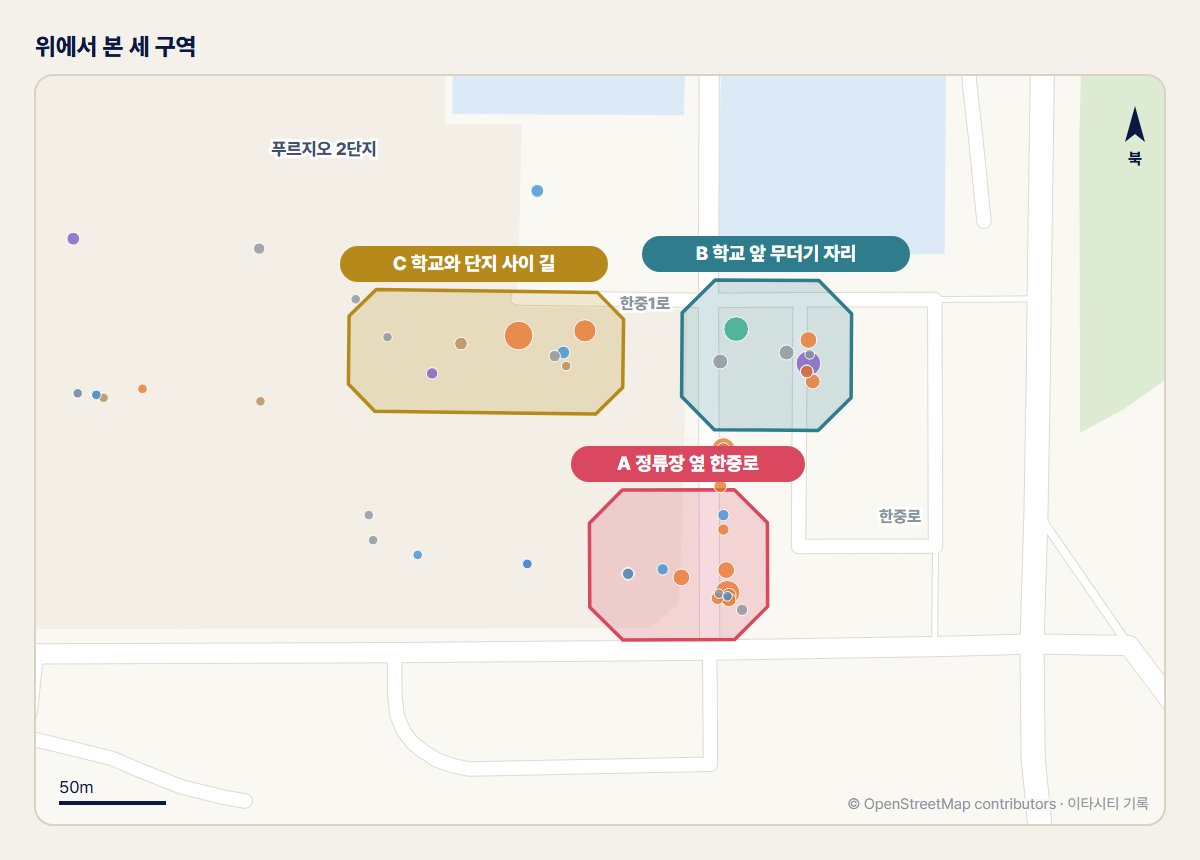 | ||||||||||||||||||
Dots = litter records (bigger = more items) | ||||||||||||||||||
Zone A type: Roadside where people wait for the bus
Hanjung-ro by the bus stop about 0.5ha, 70×83m
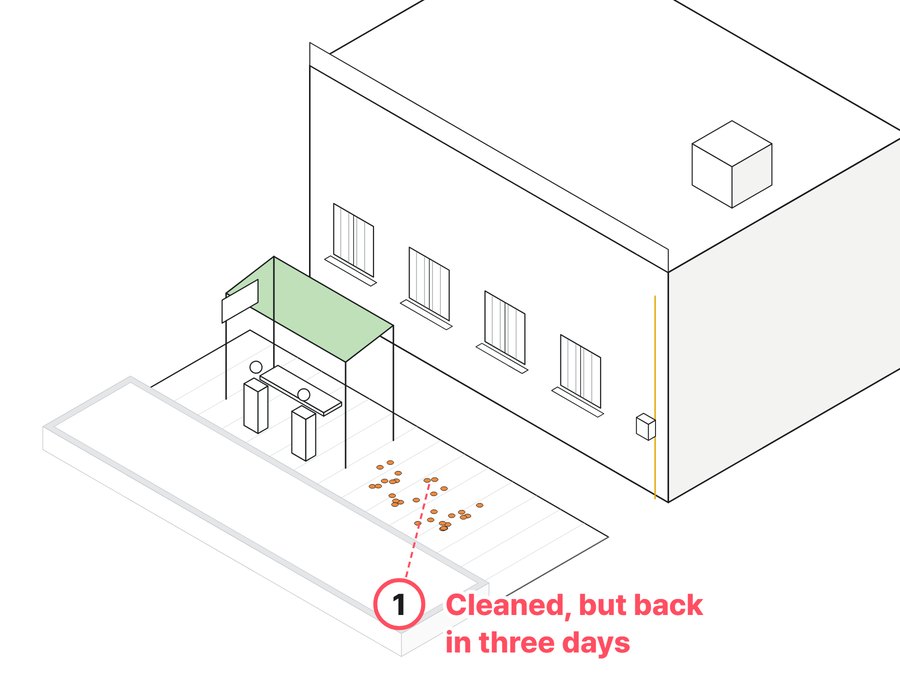
A road about 60 meters from the Baekseok Middle School intersection bus stop. Out of 60 pieces of litter, 50 were cigarette butts.
Where did the cigarette butts that piled up again in three days come from? | ||||||||||||||||||
Zone B type: Spot where things were left all at once
Litter pile in front of the school about 0.5ha, 70×79m
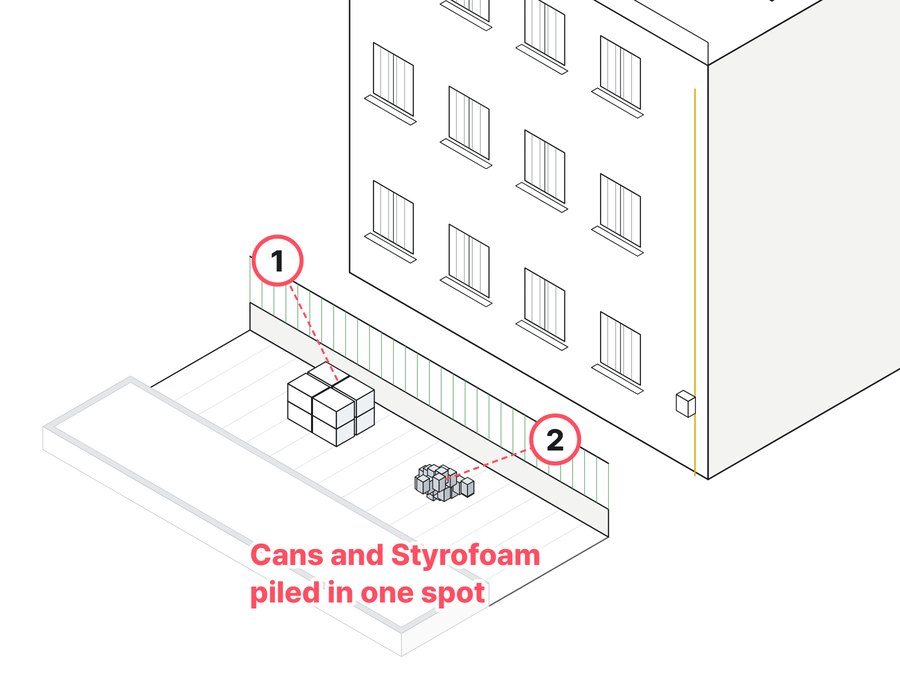
A road about 50 meters from the Baekseok Middle School boundary. 20 cans and 20 pieces of Styrofoam were piled up in one place.3
Are the cans and Styrofoam from the same event? | ||||||||||||||||||
Zone C type: New road before habits set in
Road between the school and the apartments about 0.7ha, 128×57m
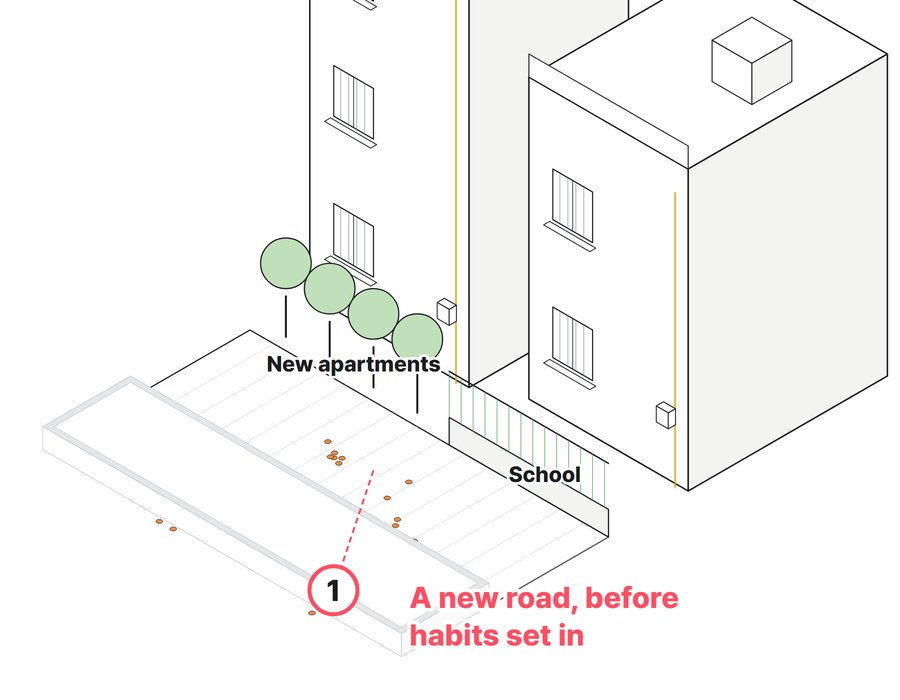
A road between Incheon Handeul Elementary School and an apartment complex. Out of 56 pieces of litter, 44 were cigarette butts.
Why were cigarette butts left on the road between the school and the apartments? | ||||||||||||||||||
 | ||||||||||||||||||
Two. A brand-new neighborhood | ||||||||||||||||||
If we notice them early, | ||||||||||||||||||
In a new neighborhood, the places where people stop and hang out are only just being decided. If we find litter spots before they become permanent, we can be the first to suggest what is needed, like trash cans or signs. | ||||||||||||||||||
The area within 30 meters of a school is a no-smoking zone
Since August 17, 2024, smoking has been banned within 30 meters of elementary, middle and high school boundaries. All the cigarette butts picked up in Baekseok-dong were found on roads outside that line.
Source: Ministry of Health and Welfare press release, “No smoking around daycare centers and schools” (2024) School boundaries based on OpenStreetMap | ||||||||||||||||||
| ||||||||||||||||||
 | ||||||||||||||||||
Three. What did we pick up? | ||||||||||||||||||
Cans and Styrofoam | ||||||||||||||||||
Cigarette butts were the most common with 139 found, followed by 30 cans and 20 pieces of Styrofoam. | ||||||||||||||||||
| ||||||||||||||||||
Counted from the app: each time a piece of litter was picked up, its type was tapped in the app | ||||||||||||||||||
Most of the cans in Baekseok-dong came from one spot in Zone B.4 | ||||||||||||||||||
Shall we figure it out together?
How did 20 cans and 20 pieces of Styrofoam end up in Zone B? Look at the clues and talk about it with a friend.
Clue 1 The cans and Styrofoam were found 15 meters apart
Clue 2 They were recorded within three minutes of each other on the same evening Clue 3 The spot is about 50 meters from the middle school boundary and about 100 meters from the bus stop There is no clear answer yet. If you visit Zone B again before the challenge ends and check whether litter has piled up again, you will have one more clue.
| ||||||||||||||||||
 | ||||||||||||||||||
Four. What our neighborhood needs | ||||||||||||||||||
What does each zone need? | ||||||||||||||||||
Think back to the three zones you saw from above. Litter gathered for different reasons in each zone, so each zone may need something different. | ||||||||||||||||||
| ||||||||||||||||||
| ||||||||||||||||||
| ||||||||||||||||||
What does this place need,
and what should it become? Leave your ideas as a voice note. We will share them in the next issue. | ||||||||||||||||||
Things you can do | ||||||||||||||||||
| ||||||||||||||||||
One more thing for your next walk If you find litter piled up in one place, please take a photo before you pick it up. Whether it was in a bag or scattered around is a clue about who left it and how. | ||||||||||||||||||
Faces in the photo are covered with hearts. | ||||||||||||||||||
Notes 1. This means it is the first cleanup record for these roads in Itacity.2. The type drawings are not real buildings. They are simple examples drawn from features we found in each zone's records. 3. On the evening of September 28, 20 cans and 20 pieces of Styrofoam were each recorded in one go, within three minutes. 4. Cans and Styrofoam were rare in the Geochang and Daegu records. | ||||||||||||||||||
| ||||||||||||||||||
One month left | ||||||||||||||||||
The challenge continues until October 31 | ||||||||||||||||||
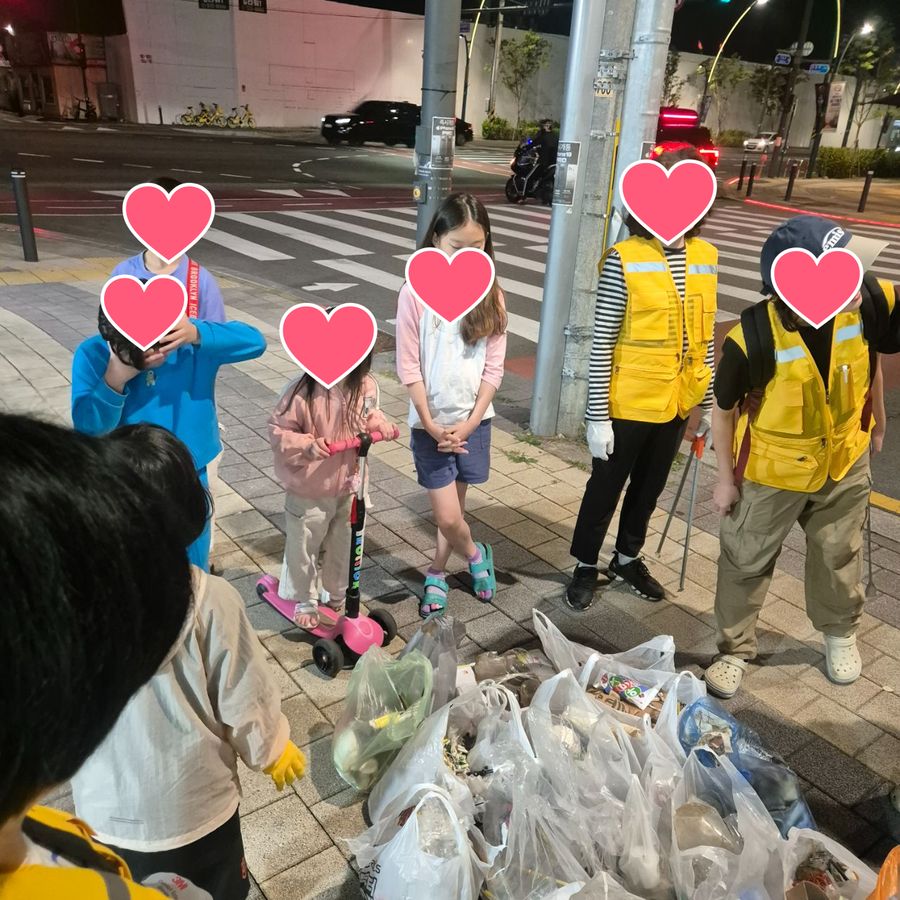 | ||||||||||||||||||
Evening of September 28, by a crosswalk in Baekseok-dong, Geomdan-gu, Incheon | ||||||||||||||||||
Thank you to the participant who joined late but still cleaned up the neighborhood roads three times, and to the teachers at Yeonhui Youth Center. If you leave a one-line comment after your activity, we will include it in the next issue. | ||||||||||||||||||
 | ||||||||||||||||||
 | ||||||||||||||||||
|
For questions about the World Cleanup Day award program, Itaseoul (nonprofit) Counting period: September 28 to October 3, 2026 (last activity October 1) |
 Plastic