| Images not showing? View in browser 한국어로 보기 | |||
 | |||
 | |||
Afternoon of September 16 | |||
Green Action Challenge × World Cleanup Day 2026, Midterm Update | |||
Our Green Neighborhood Map, | |||
🏫 A story about our students working together | |||
September 10 – 25, 2026 | |||
 | |||
Hello! We are happy to share news from Green Action. | |||
Here is a story about our students. On September 10, SALT joined ITACITY. Over two weeks, 26 students logged 32 cleanup records on the app around our town. Together, they picked up 2,182 pieces of trash. Across Korea, 1 out of every 13 helpers was a SALT student. | |||
Before looking at numbers, we want to share our students' words first. Their stories show why they stepped outside again to help our neighborhood. | |||
 | |||
📢 In this issue
🗺 Places SALT cared for together: How 26 students connected 12 neighborhoods 🔎 A closer look at September: In Dochon-dong, every street tells a different story 🧩 Clues hidden in the trash: Who was here, and what did they leave behind? 💬 Words from our students: Caring for our town with friends 🌱 One month left: Keeping our promise until October 31 | |||
🗺 NEIGHBORHOODS SALT CARED FOR TOGETHER | |||
The steps of 26 students connected 12 neighborhoods | |||
Students walked around their own towns and near the school. One person's record is just a small dot on a map. But when we bring 26 records together, they connect 12 neighborhoods. Their steps reached all the way from Bundang, Suji, and Wirye to Gaepo-dong in Seoul. | |||
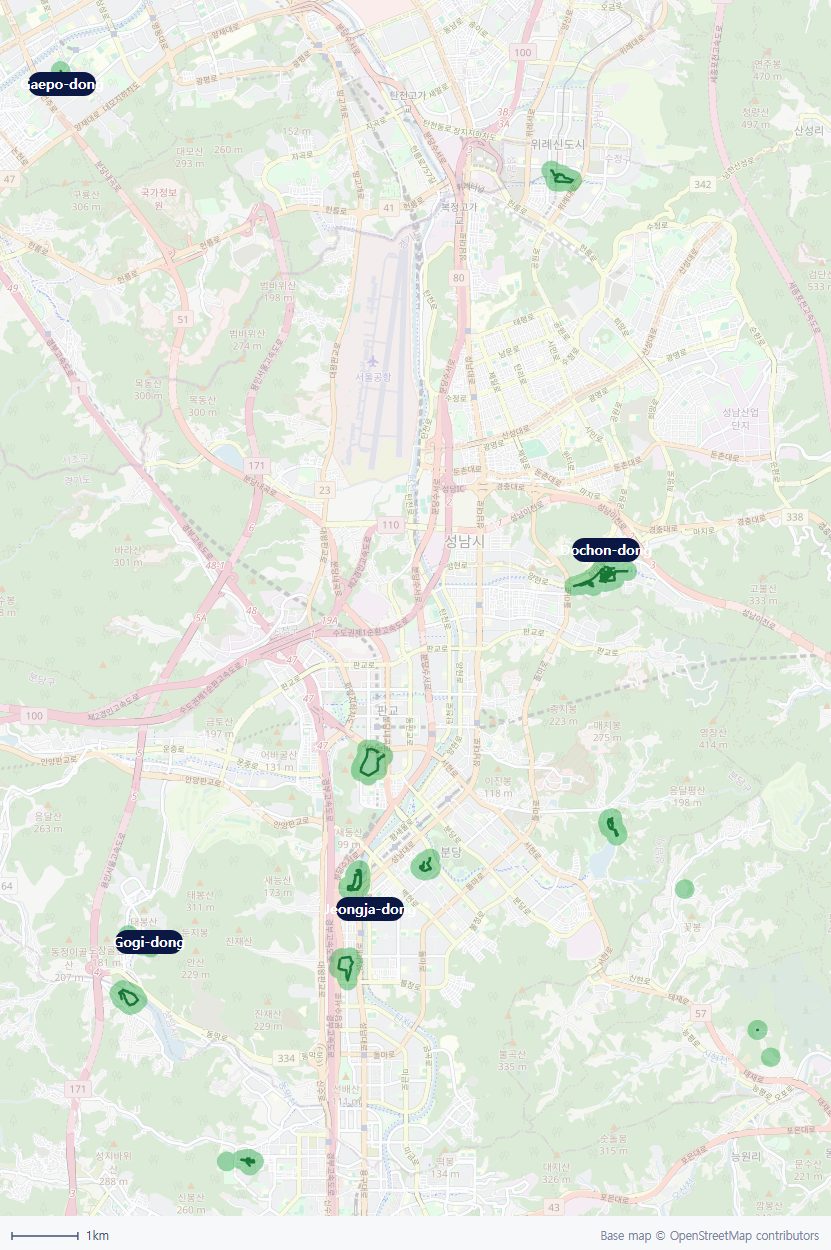 | |||
Green areas = places where SALT students cleaned up and left records | |||
| |||
One small record is just a dot. But when we put them together, they make a map of our town. This map shows us right away where trash gathers. Every record our SALT students made helps our neighborhood stay strong and clean, even when things change. | |||
How small clues give our town big strength
In the US, a project called 'ISeeChange' helps people notice changes in the weather and nature around them. Neighbors share what they see every day. When people gather these small clues, it becomes a treasure that helps everyone understand their town better. Noticing these changes helps our town stay safe and bounce back when problems happen. The more neighbors join hands, the stronger our town grows. | |||
 | |||
🔎 SEPTEMBER CLOSE-UP | |||
Dochon-dong: Every street leaves different clues behind | |||
Half of the clues our SALT students found were hidden right here in Dochon-dong in Seongnam, near the school. When we matched all 875 items of trash to the nearest streets (within 30 meters), a story came out. The thicker and darker the lines on the map, the more trash clues students found every 100 meters. | |||
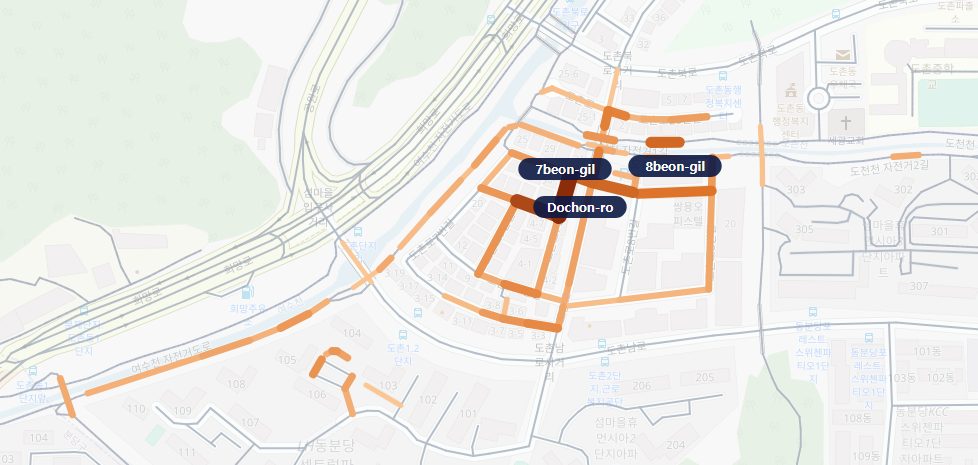 | |||
Thicker, darker lines = more items found per 100m | |||
When we compared the clues on each street side by side, every street told a totally different story. | |||
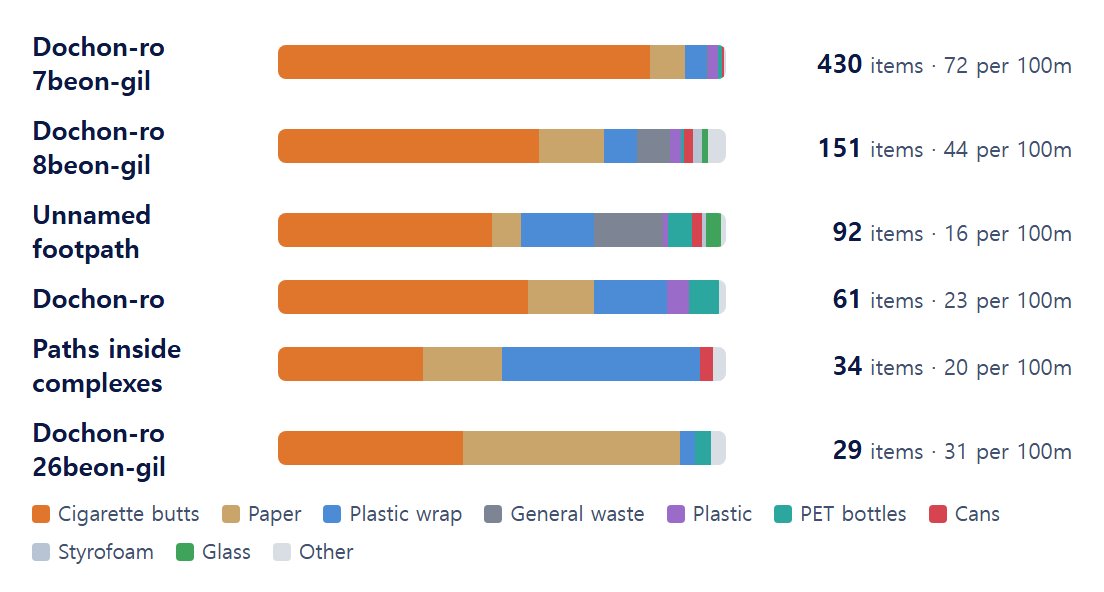 | |||
We compared streets that were at least 90 meters long with 25 or more items recorded | |||
| |||
Dochon-ro 7beon-gil: The street corner where butts gather | |||
We made a 3D map of the street corner where they found the most cigarette butts, about 80 meters on each side. We drew the buildings with their real heights and colored the ones with shops orange to highlight the clues. (We did not include any shop names.) | |||
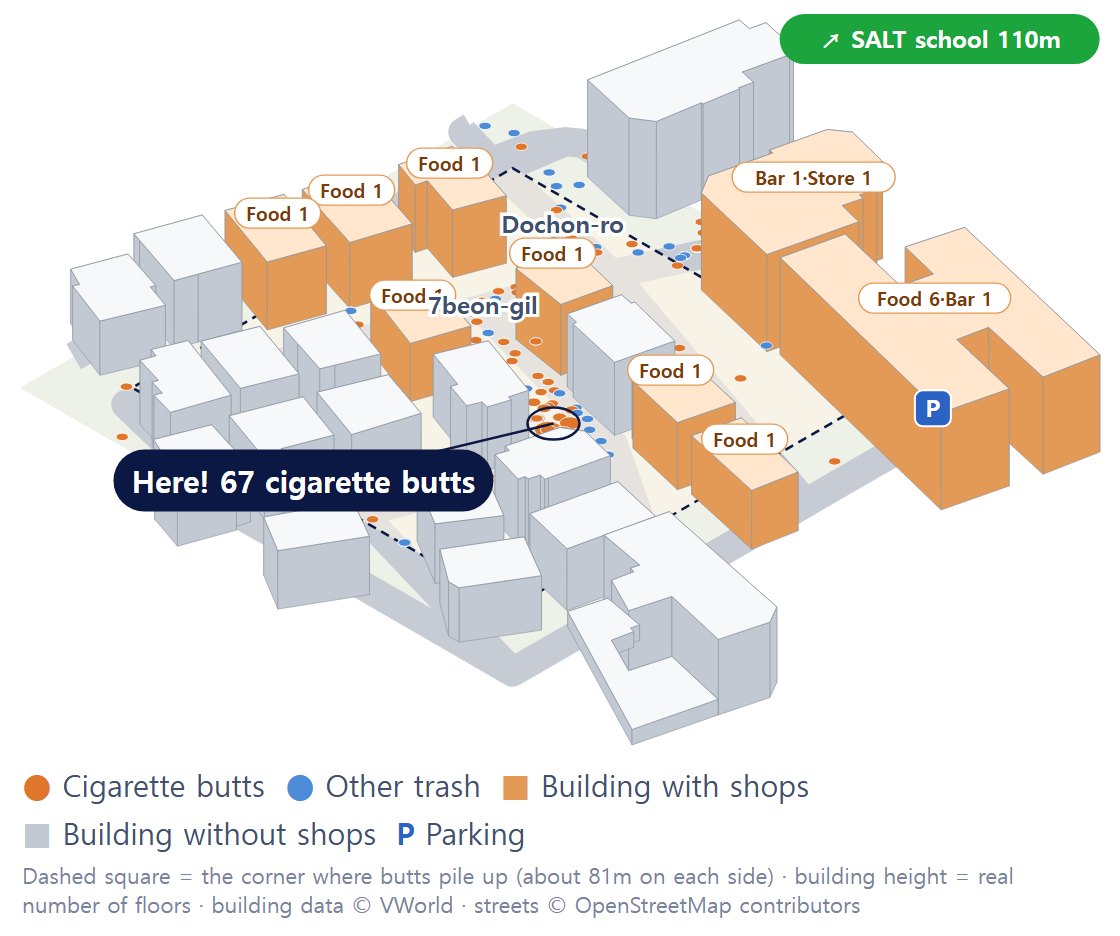 | |||
Building height = real number of floors | |||
| |||
🔍 Can you solve the mystery with us?
Why did butts gather so tightly right in the middle of this narrow alley? Look closely at the picture to find the hidden clues.
Clue 1 Shop doors line up along one side
Clue 2 It is a narrow alley hidden just one step off the main road Clue 3 On September 17 and September 23, butts gathered in the exact same spot There is no set answer just yet. Having shops nearby is not the whole story. We plan to visit this corner again with our students to discover more clues together.
| |||
Even in the same neighborhood, each street has different trash depending on how people use it. These clues found by our students point out which places need our care first. When we look at these streets again, we will see how much our town has changed. | |||
 | |||
Three zones in Dochon-dong | |||
Three spots where litter gathered, each for a different reason | |||
When we mapped the Dochon-dong litter data, the worst spots fell into three zones. The taller the bar on the map, the more litter we found there. | |||
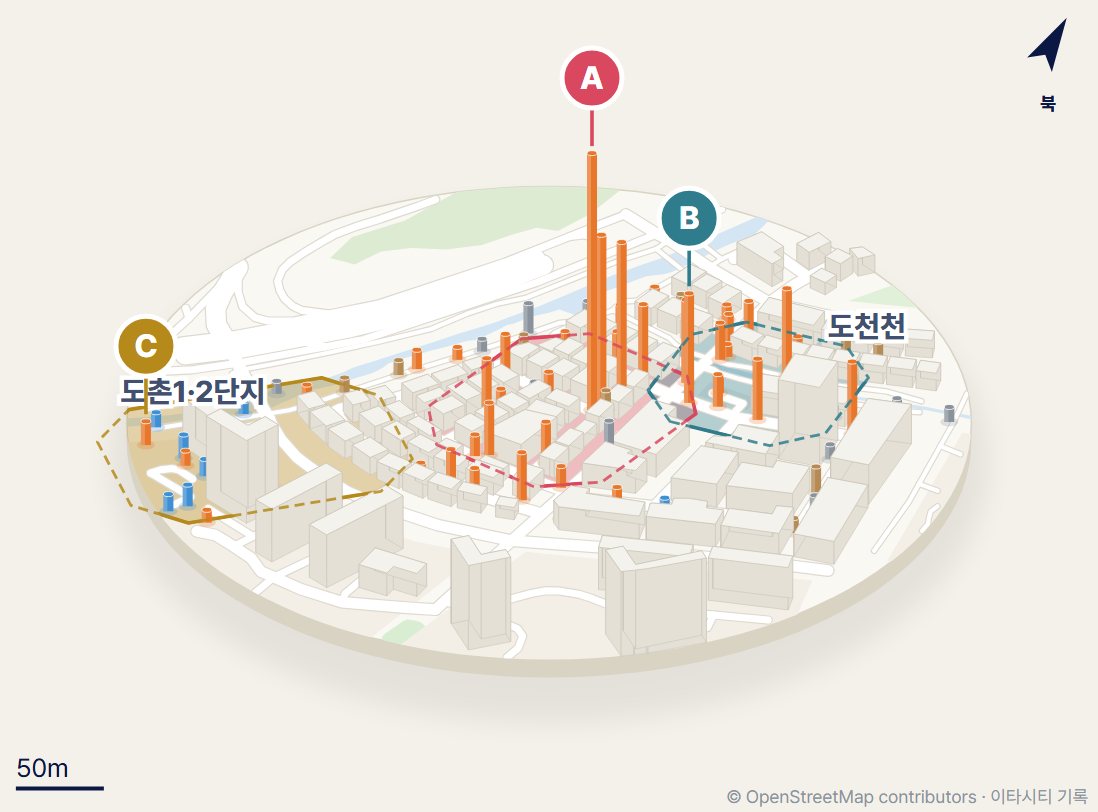 | |||
Bar height = items picked up at that spot (25 m × 25 m square) | |||
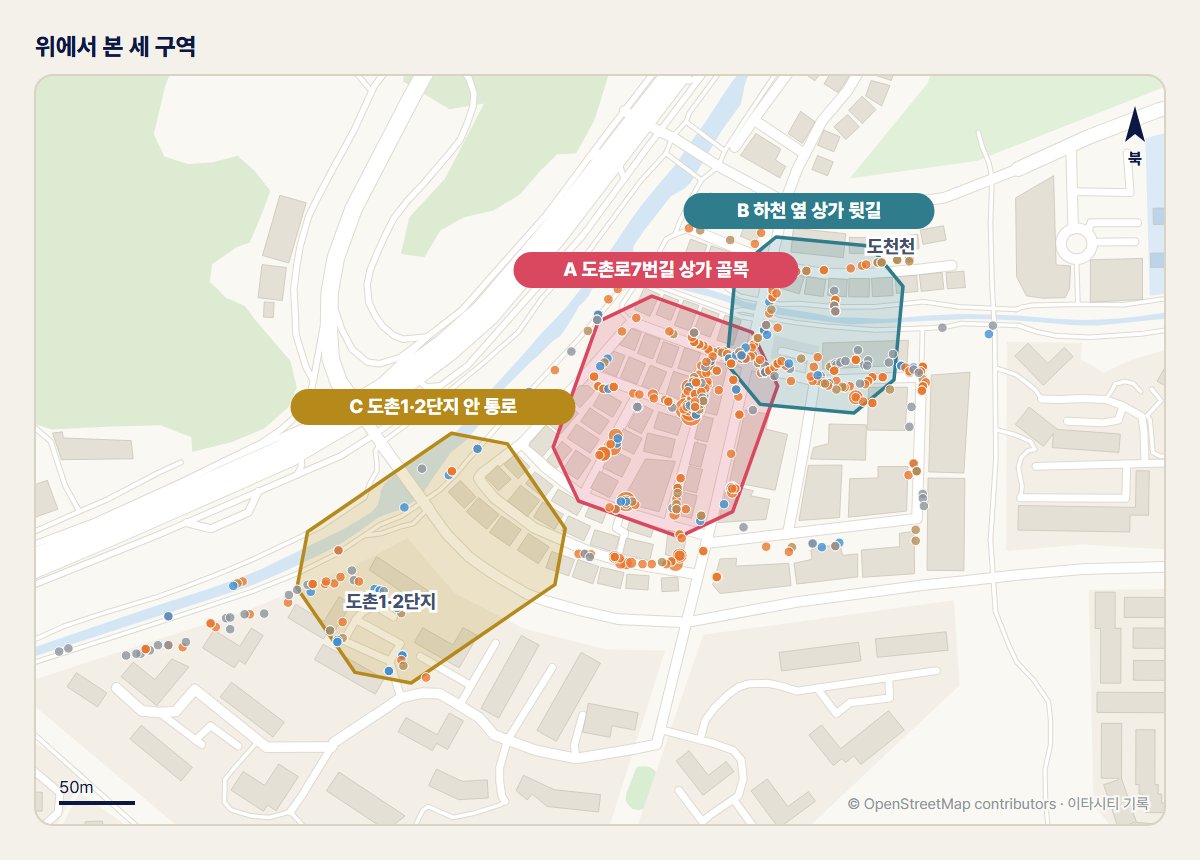 | |||
Based on SALT student records from 13 to 28 September. Numbers in the section above are as of 24 September, so they may differ slightly. | |||
Zone A type: Narrow alley by ground-floor shops
Shop alley on Dochon-ro 7beon-gil
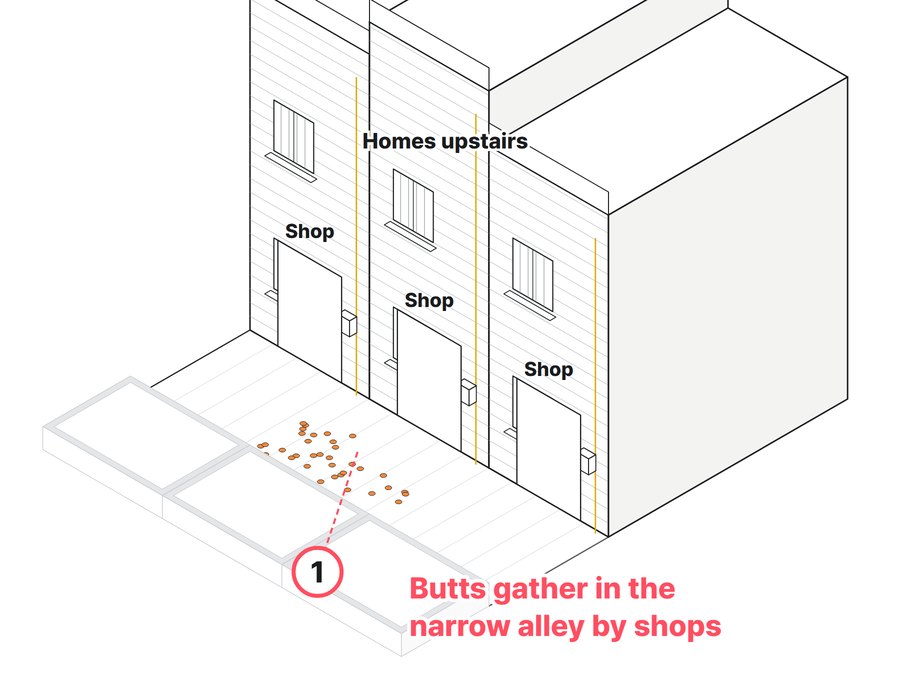
An alley lined with buildings that have restaurants and bars downstairs and homes upstairs. Of the 416 items picked up here, 331 (80%) were cigarette butts.
Where should people put their cigarette butts when smoking outside the shops? | |||
Zone B type: Back road leading to Docheoncheon Stream
Back road by the stream
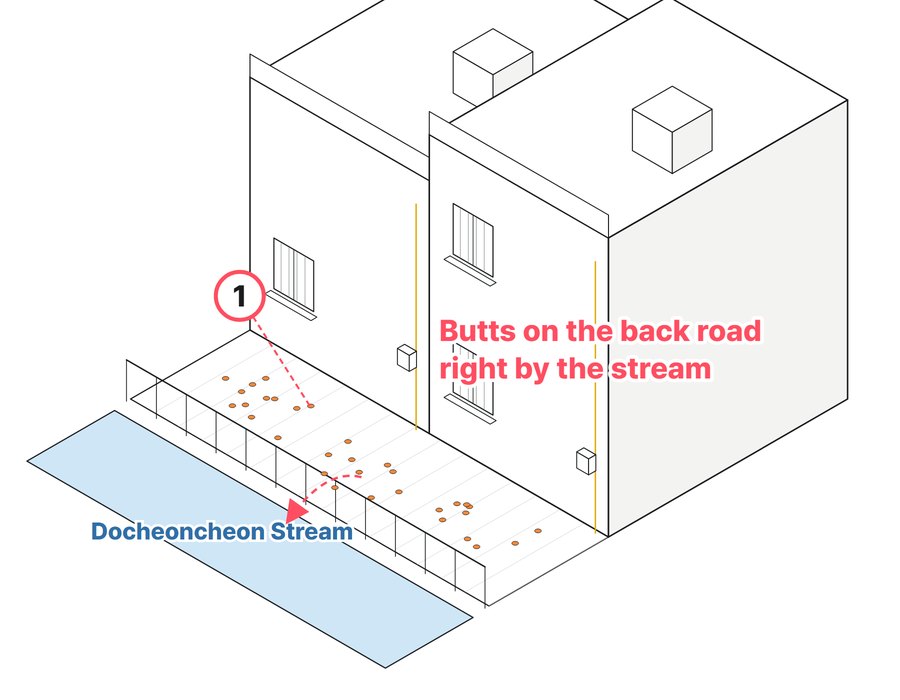
Where the road behind the shops meets the Docheoncheon bike path. Of 218 items, 136 (62%) were cigarette butts, and 37 were paper.
The stream is just past the railing. How do we keep butts out of the water? | |||
Zone C type: Paths between apartment blocks
Paths inside the Dochon 1 and 2 apartment complexes
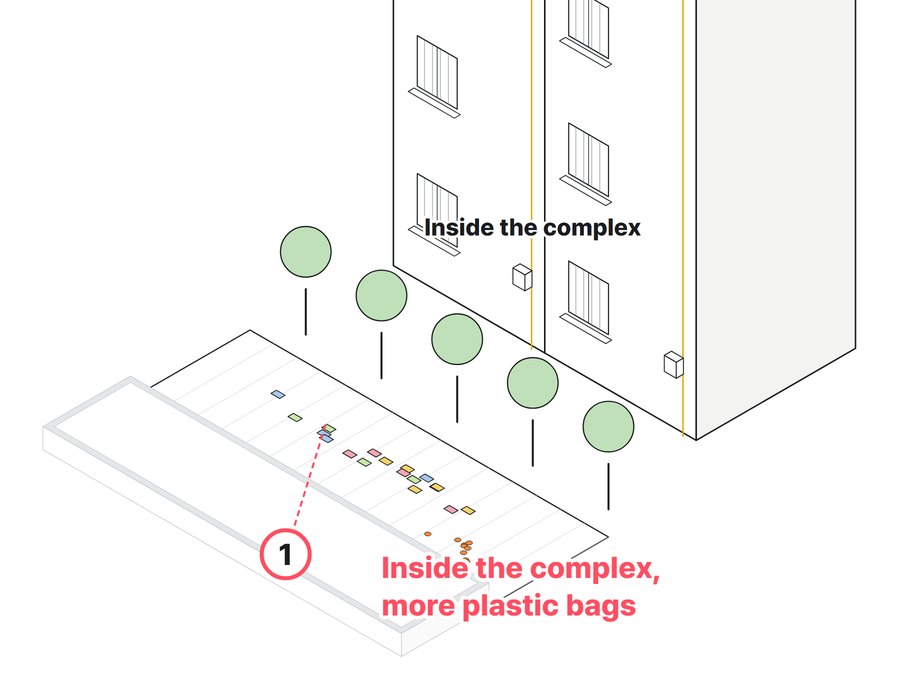
The paths between apartment buildings. Only 31 items were recorded, but unlike the other two zones, plastic bags (14, 45%) outnumbered butts.
Where did the plastic bags inside the complex come from? | |||
What does each zone need? | |||
| |||
| |||
| |||
 | |||
🧩 CLUES LEFT BY TRASH | |||
Who was here, and what did they do? | |||
Leftover trash tells a story about what happened in that spot. We placed labels on the trash in the photos, without any brand names. | |||
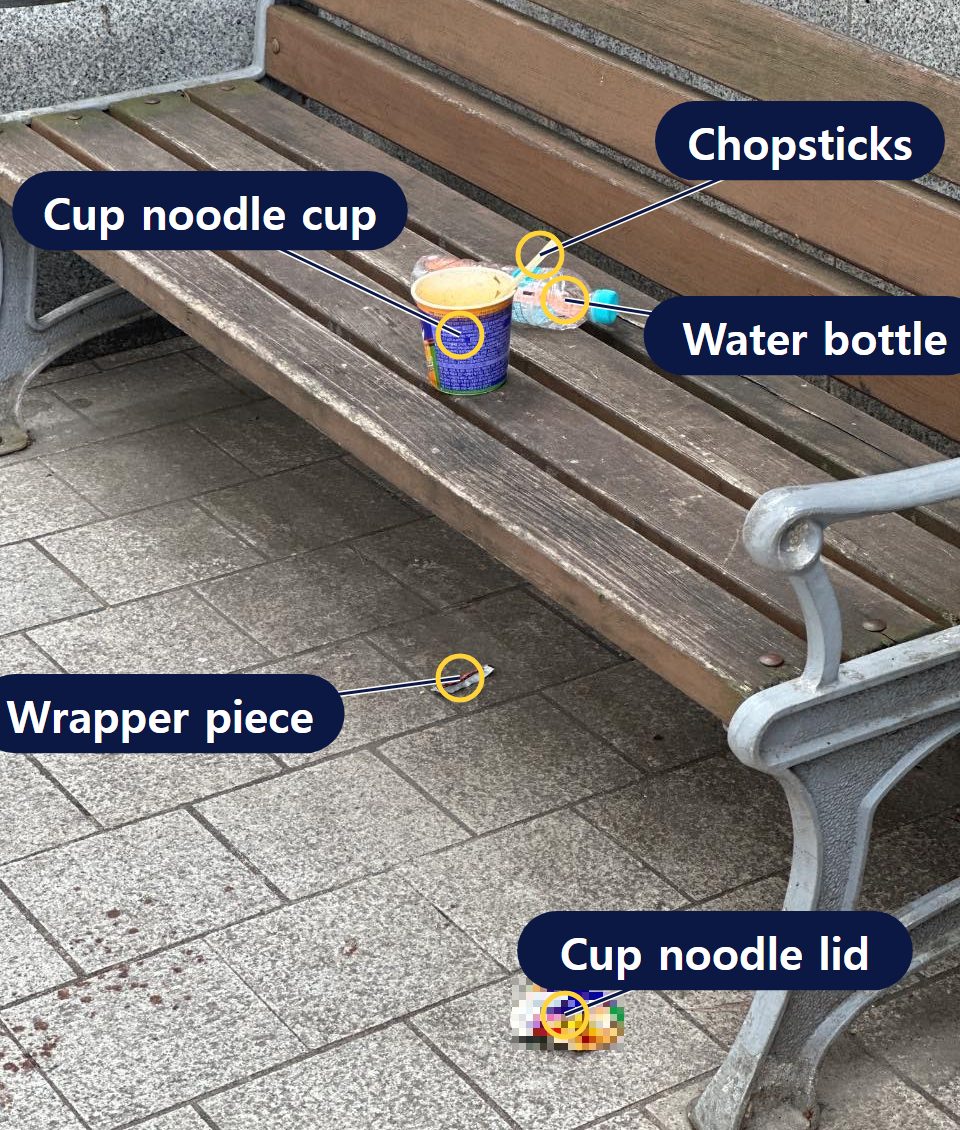 | |||
September 13 | |||
A cup noodle container, a water bottle, and wooden chopsticks were left on the bench, with the cup noodle lid and a small piece of packaging on the ground. Since most of these are items people often buy at a convenience store, someone likely sat down to enjoy a snack and left them behind. How many people were here? When did they visit? | |||
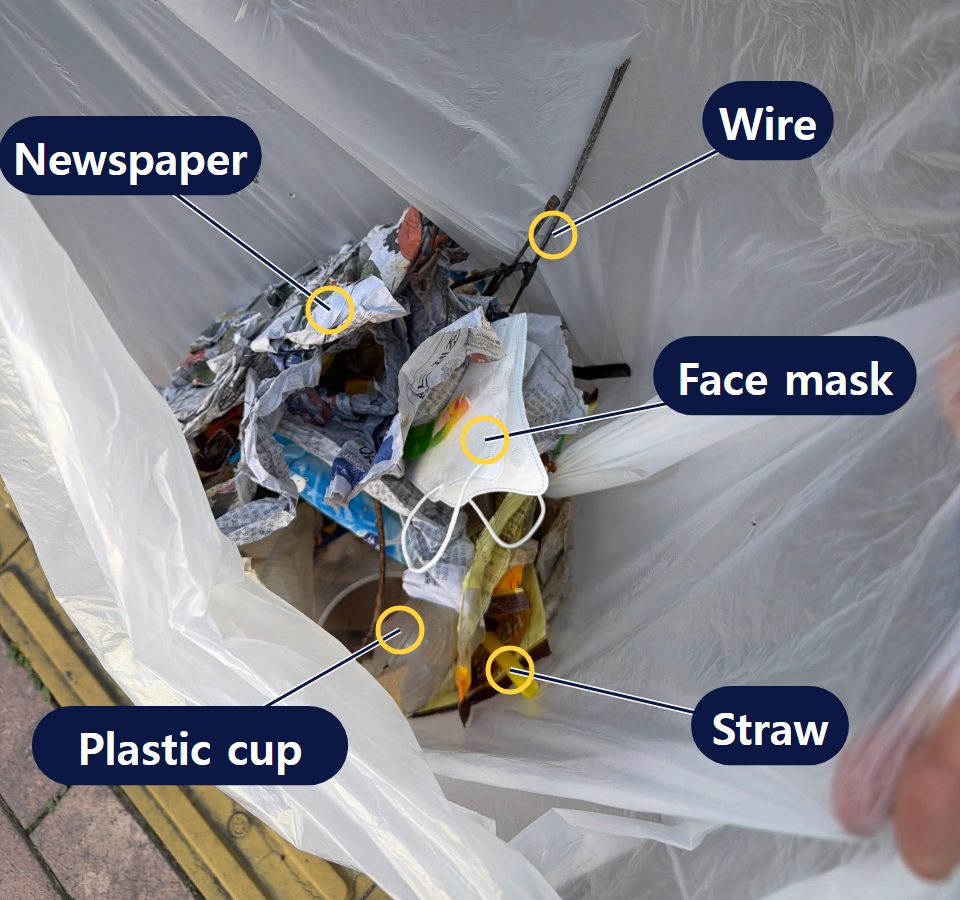 | |||
Morning of September 18 | |||
A bag filled by SALT students in the alley beside the school contained pieces of newspaper, a face mask, a plastic cup, a straw, and a piece of wire. Most of these are small and light, so they are easy to miss. | |||
📷 One helpful tip for next time Take a photo BEFORE you pick up the trash. The way trash is sitting in its spot gives us the most important clue about our town. | |||
 | |||
💬 IN THE STUDENTS' WORDS | |||
“Doing it at school with my friends was so much fun” | |||
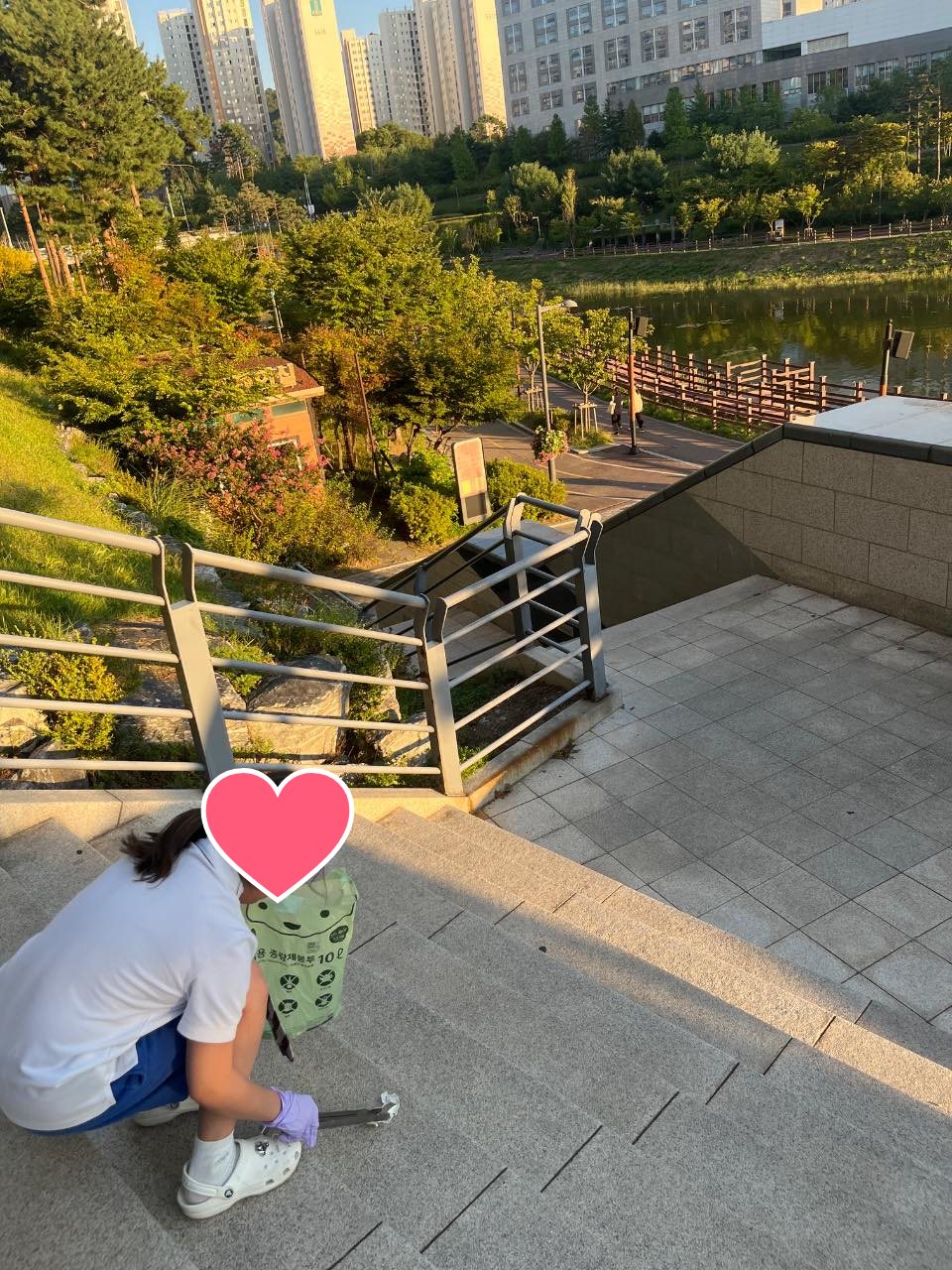
After picking up trash, students can leave a note. Here are three notes written by our SALT students. | |||
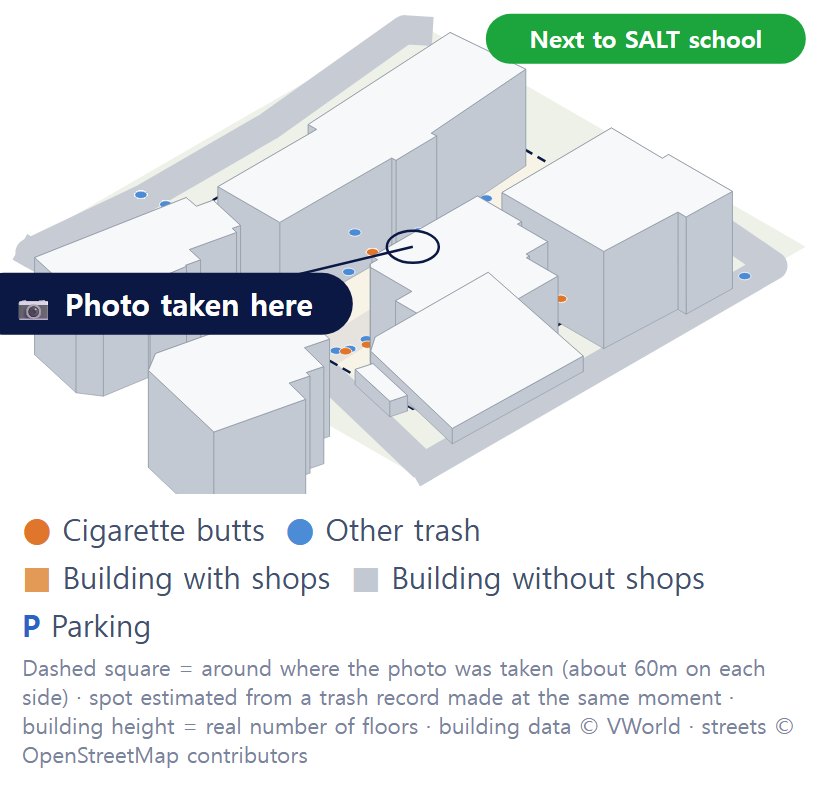 | |||
Where this photo was taken: found using the location recorded at that moment. Due to a small location difference (about 10m), we cannot tell the exact gap between the buildings. | |||
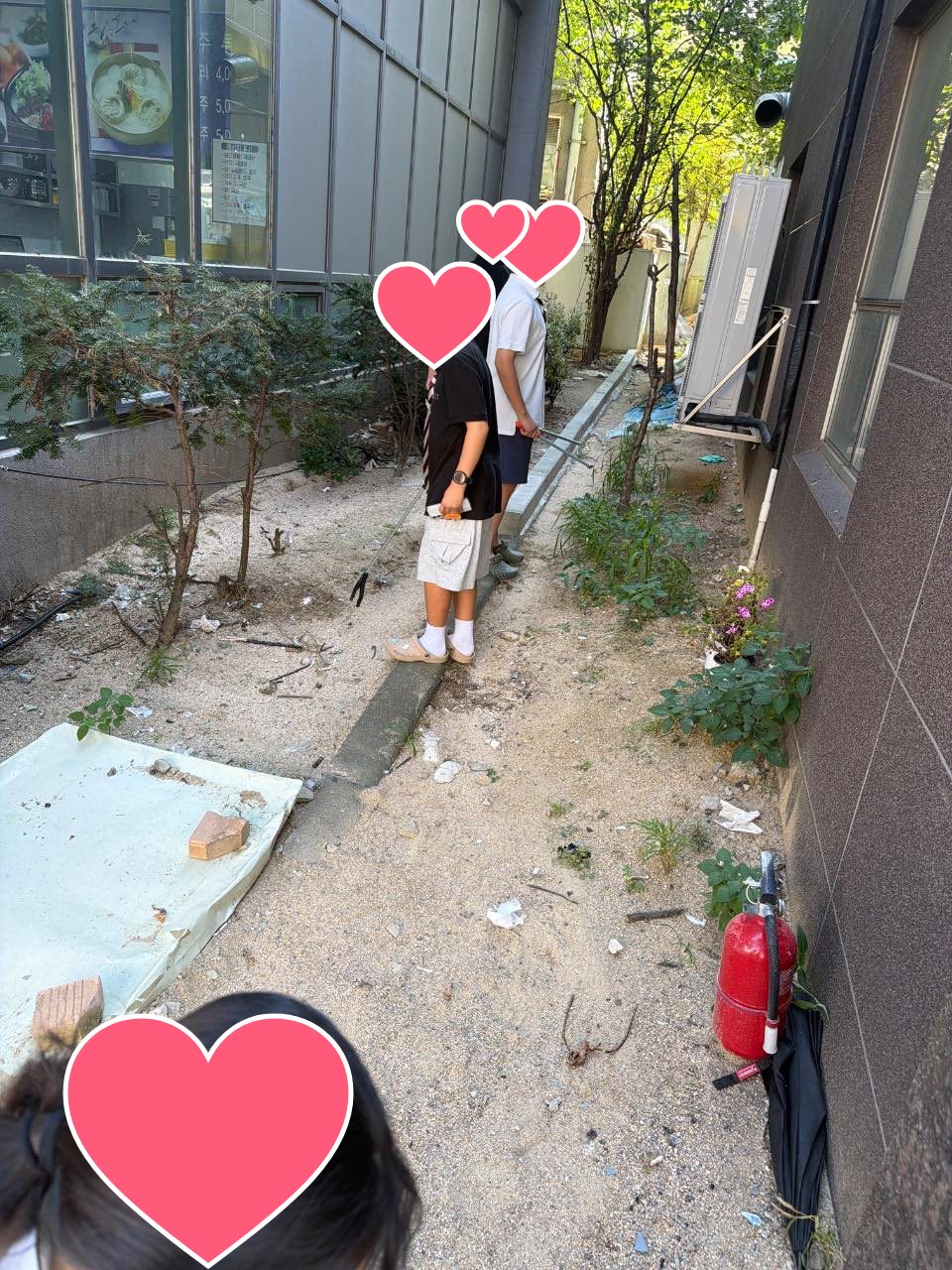 | |||
In the alley beside the school building with friends | |||
“Doing it at school with my friends was so much fun.”
학교에서 친구들과 같이 하니 너무 재밌었어요 | |||
“It was hard, but when I think of it as protecting our neighborhood, I feel really proud.”
힘들긴 했지만 우리 동네를 지키는 일이라고 생각하면 진짜 뿌듯해요 | |||
“I'm happy because I could help other people.”
다른 사람에게 도움이 돼서 행복해요 | |||
We shared these notes anonymously, fixing only the spelling. The gray line under each note shows the original Korean words. Hearts cover faces in the photos. | |||
It was fun with friends, rewarding for our neighborhood, and helpful to others. The real reason our students went back outside is captured in these words, which tell us more than numbers ever could. | |||
| |||
🌱 ONE MORE MONTH | |||
The challenge continues until October 31 | |||
Thank you to our SALT students and teachers for looking closely at the ground and caring for our town. To the 23 students who have not made a record yet, come join us today. When everyone's records come together, our strength to protect our neighborhood grows even bigger. 🌱 | |||
 | |||
 | |||
|
For questions about applying for or joining the World Cleanup Day International Award, ITASEOUL (non-profit) itaseoul@itaseoul.org kywa.ita.city Period: September 10, 2026 (SALT joined) to September 25 (last activity September 23) |