| Images not showing? View on the web 한국어 | ||||||||||||||||||
 | ||||||||||||||||||
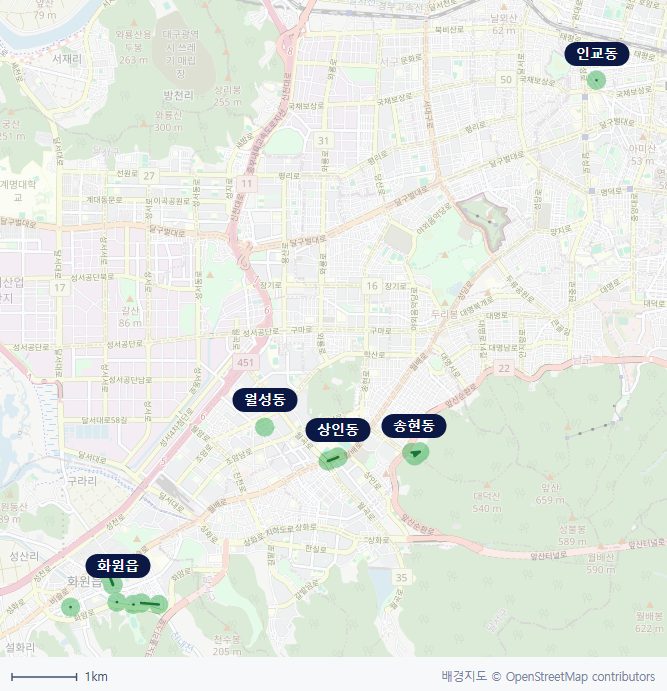 | ||||||||||||||||||
Green areas = places where litter was picked up and recorded | ||||||||||||||||||
Green Action Challenge × News from Daegu Metropolitan Youth Training Center | ||||||||||||||||||
362 cigarette butts found | ||||||||||||||||||
This issue tells the story of a participant from the Daegu Metropolitan Youth Training Center | ||||||||||||||||||
September 12 to September 19, 2026 | ||||||||||||||||||
 | ||||||||||||||||||
Hello! Here is news from Green Action, part of the World Cleanup Day award program. | ||||||||||||||||||
This story comes from Daegu. From September 12 to 19, one participant from the Daegu Metropolitan Youth Training Center picked up 458 pieces of litter in five neighborhoods of Daegu. Of these, 362 (79%) were cigarette butts.1 | ||||||||||||||||||
 | ||||||||||||||||||
Three things the data told us
1. Butts on the roads outside the complex Two of the three zones where butts gathered (B and C) were roads around an apartment complex. 2. 99 even inside the no-smoking zone Even within 30 meters of the Hwawon Middle School boundary (Zone A), 99 butts were recorded. 3. The secret of streets that look clean The participant wrote, “I was really surprised there were so many more cigarette butts than I expected.” | ||||||||||||||||||
In this issue
1 Butts along the apartment complex wall 2 No smoking inside, butts outside the wall 3 Butts on streets that look clean 4 A participant's words 5 What each zone needs | ||||||||||||||||||
One. Map of Hwawon-eup | ||||||||||||||||||
Cigarette butts piled up | ||||||||||||||||||
The taller the bar, the more litter was found there.2 | ||||||||||||||||||
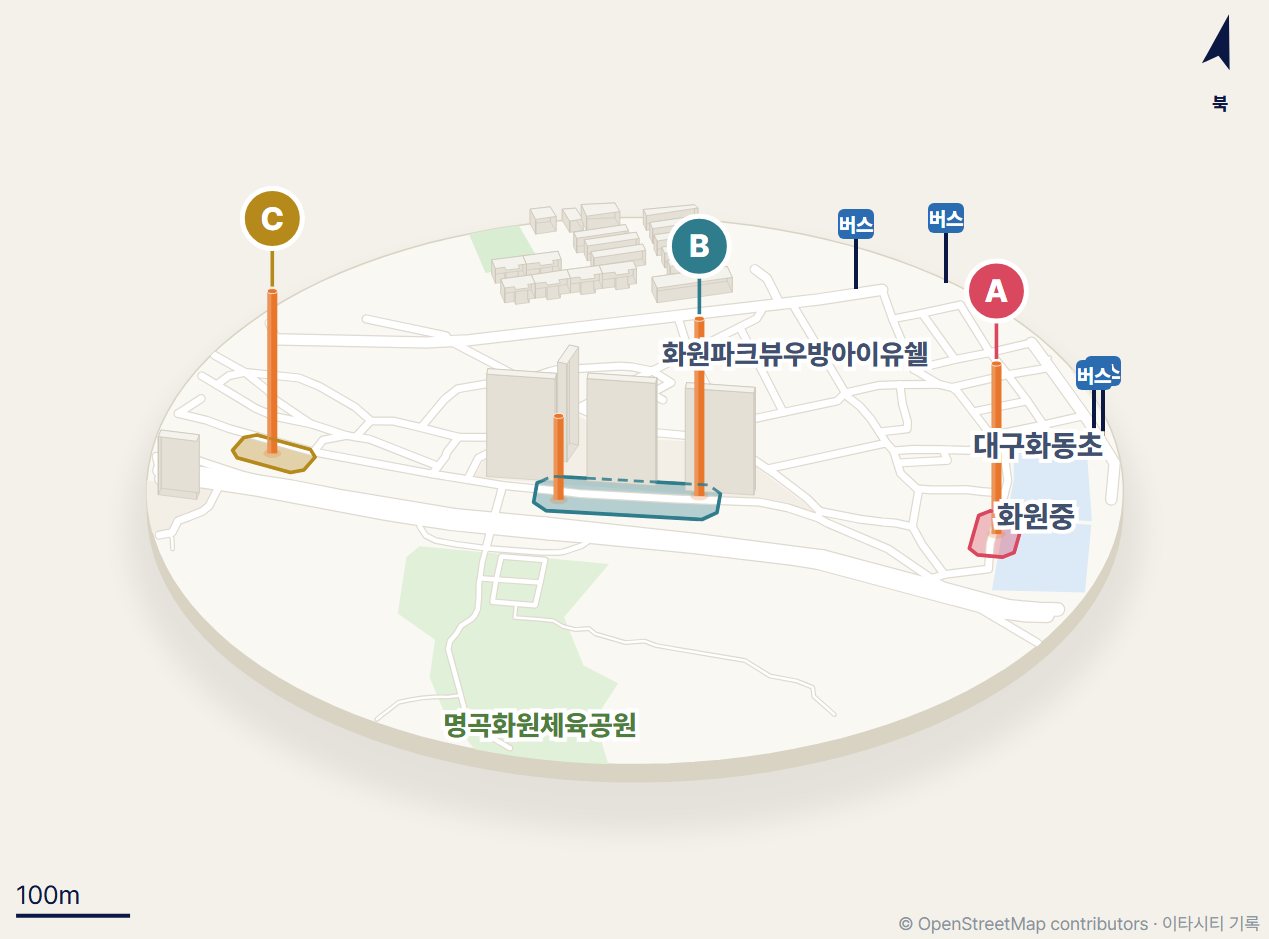 | ||||||||||||||||||
 Most cigarette butts here Most cigarette butts here | ||||||||||||||||||
Bar height = items recorded at that spot (25 m × 25 m square) | ||||||||||||||||||
The three zones from above | ||||||||||||||||||
Here are the three zones seen from above. Cigarette butts piled up differently in each zone. We drew a simple example for each type.3 | ||||||||||||||||||
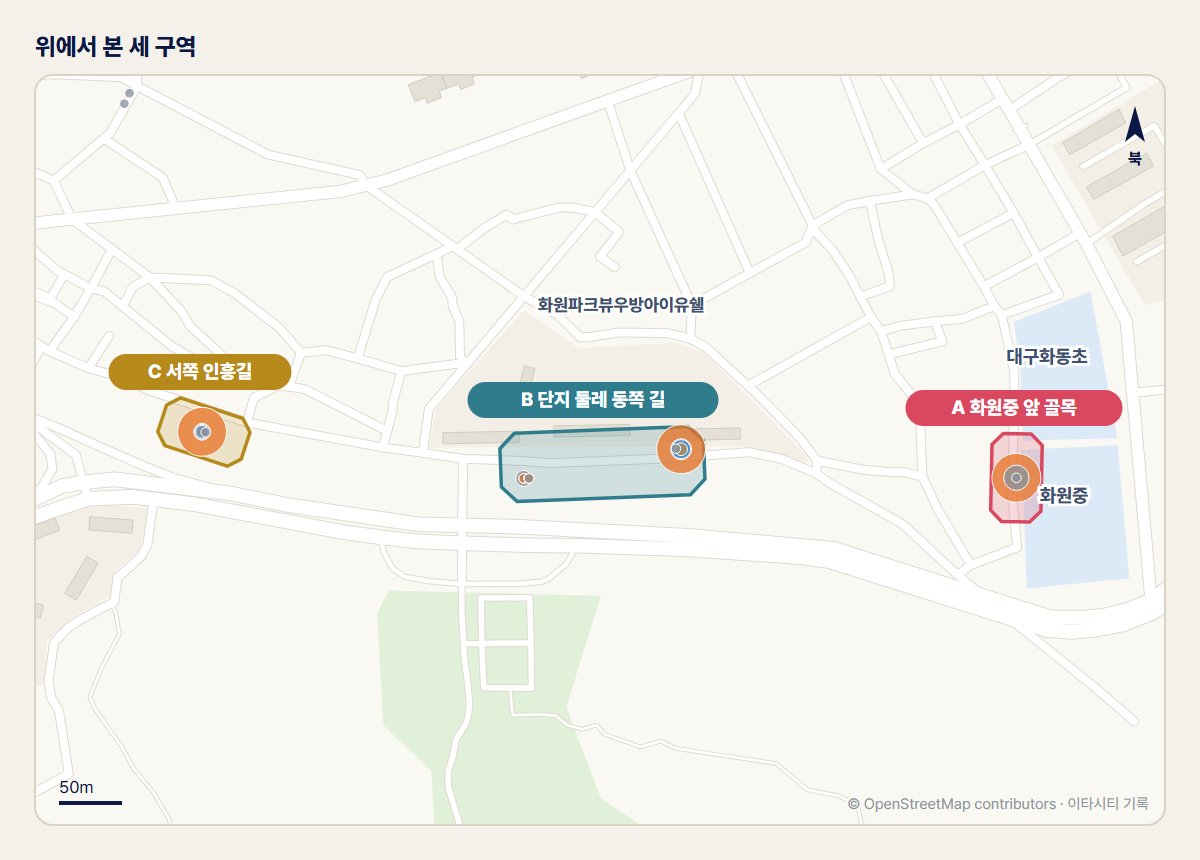 | ||||||||||||||||||
Dots = recorded spots (bigger = more items) | ||||||||||||||||||
Zone A type: School alley inside the no-smoking zone
Alley in front of Hwawon Middle School about 0.3ha, 70×40m
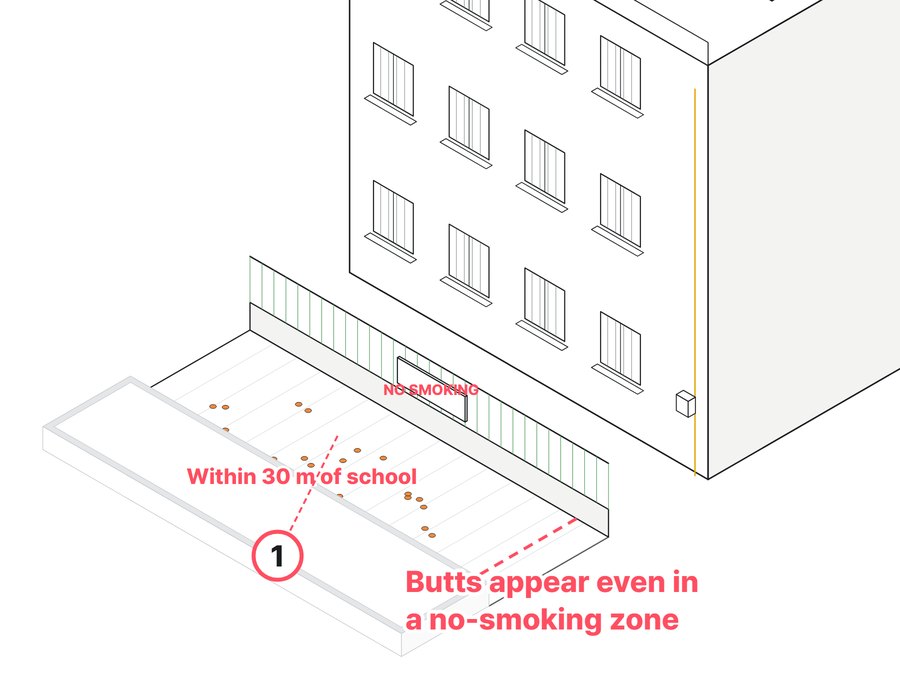
An alley within 30 meters of the Hwawon Middle School boundary. Out of 121 pieces of litter, 99 were cigarette butts.
The 30 meters around a school is a no-smoking zone. So why were so many butts found here? | ||||||||||||||||||
Zone B type: Road outside the complex wall
East road around the complex about 0.9ha, 162×54m
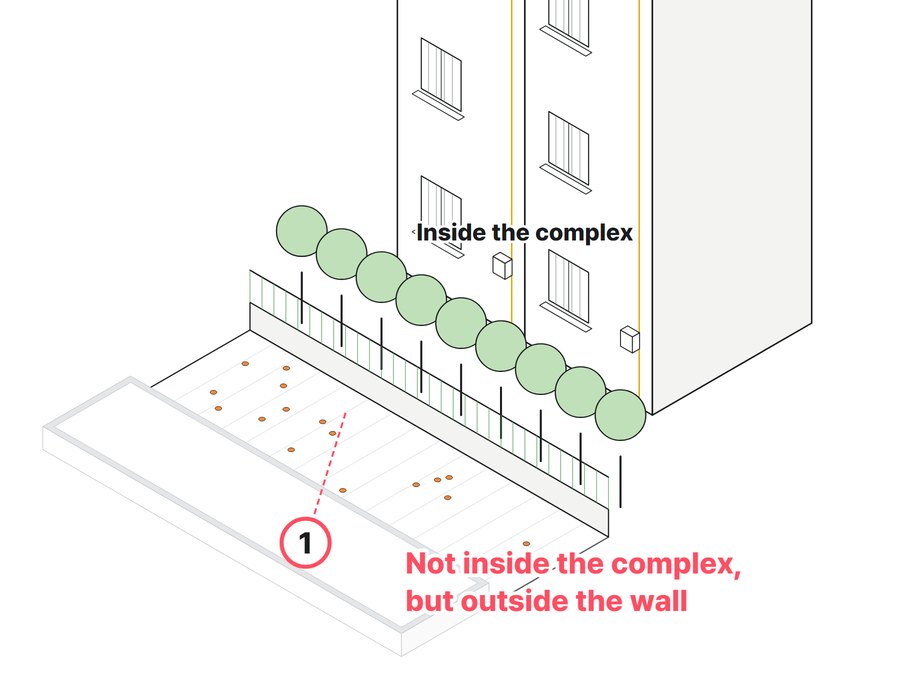
Inheung-gil, the road that runs along a large apartment complex. Out of 183 pieces of litter, 139 were cigarette butts.
Is it just a coincidence that cigarette butts piled up on the street outside the complex, rather than inside? | ||||||||||||||||||
Zone C type: Main road edge leading to a storm drain
West Inheung-gil about 0.3ha, 70×40m
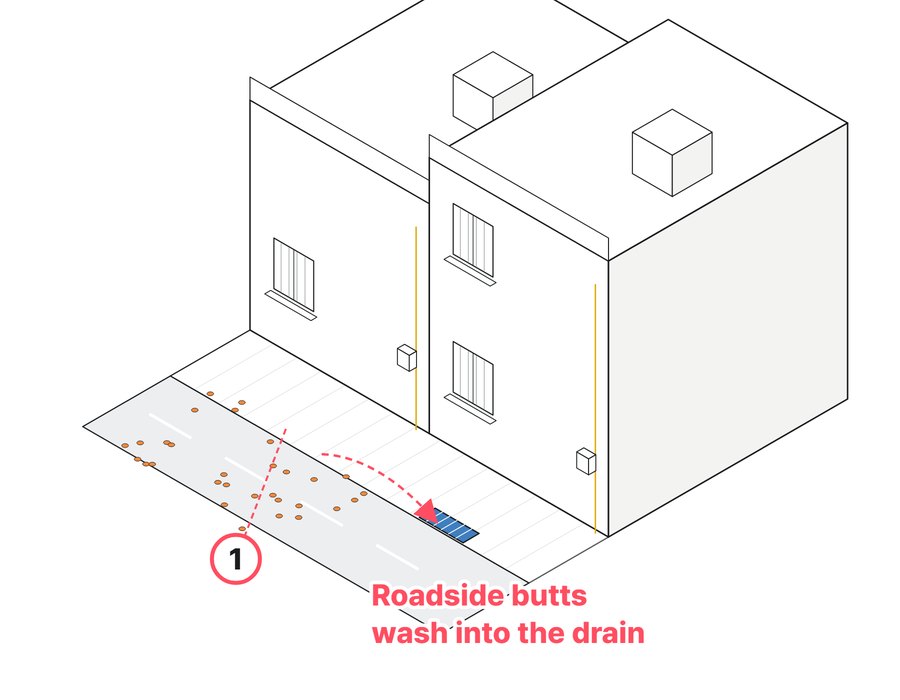
The part of Inheung-gil that continues west of the complex. Out of 115 pieces of litter, 99 were cigarette butts.
What do Zone B and Zone C have in common? | ||||||||||||||||||
 | ||||||||||||||||||
Two. The road beside the apartment complex | ||||||||||||||||||
No smoking inside the complex, | ||||||||||||||||||
When it becomes hard to smoke inside an apartment complex, people may move to the street outside the wall. The cigarette butts on the map show this pattern. | ||||||||||||||||||
How no-smoking zones are set
By law, the area within 30 meters of a school boundary has been a no-smoking zone since August 17, 2024. In an apartment complex, if more than half of the residents apply, hallways, stairs, elevators and underground parking lots can become no-smoking zones. In both cases, the streets just outside are not no-smoking zones.
Sources: National Health Promotion Act, Article 9 Ministry of Health and Welfare press release, “No smoking around daycare centers and schools” (2024) | ||||||||||||||||||
| ||||||||||||||||||
 | ||||||||||||||||||
Three. What did we pick up? | ||||||||||||||||||
Even streets that look clean | ||||||||||||||||||
After cigarette butts, the most common items were plastic, with 37, and plastic bags and wrappers, with 19. | ||||||||||||||||||
| ||||||||||||||||||
Counted from the app: each time a piece of litter was picked up, its type was tapped in the app | ||||||||||||||||||
Cigarette filters are made of plastic, so they do not break down easily. If rain washes them into a storm drain, they can travel all the way to rivers and the sea. | ||||||||||||||||||
Shall we figure it out together?
Why did so many cigarette butts end up on the streets around the apartment complex? Look at the clues and talk about it with a friend.
Clue 1 Two of the three zones are roads around a large apartment complex
Clue 2 Apartment hallways, stairs and underground parking lots can be made no-smoking zones Clue 3 Zone A is within 30 meters of a middle school boundary, inside the school's no-smoking zone There is no clear answer yet. Next time, please take a photo of where the butts are before you pick them up. You will have one more clue.
| ||||||||||||||||||
 | ||||||||||||||||||
Four. A participant's words | ||||||||||||||||||
“There were so many more | ||||||||||||||||||
A comment written in Songhyeon-dong on September 19. | ||||||||||||||||||
「Even streets that looked fairly clean had far more cigarette butts than I expected when I looked closely. I was really surprised.」
Afternoon of September 19, Songhyeon-dong, Dalseo-gu | ||||||||||||||||||
Words left in activity records are shared anonymously. | ||||||||||||||||||
A street that looks clean from a distance can look very different when you look closely. That discovery is where Green Action begins. | ||||||||||||||||||
 | ||||||||||||||||||
Five. What our neighborhood needs | ||||||||||||||||||
What does each zone need? | ||||||||||||||||||
Think back to the three zones you saw from above. Litter gathered for different reasons in each zone, so each zone may need something different. | ||||||||||||||||||
| ||||||||||||||||||
| ||||||||||||||||||
| ||||||||||||||||||
What does this place need,
and what should it become? Leave your ideas as a voice note. We will share them in the next issue. | ||||||||||||||||||
Things you can do | ||||||||||||||||||
| ||||||||||||||||||
One more thing for your next walk Please record each piece of litter exactly where you pick it up. We can only figure out why cigarette butts pile up if we know which street and which corner they came from. | ||||||||||||||||||
Notes 1. In three records, the number of butts was written as exactly 99. If counting stopped at that number, there may have been even more.2. On September 19, all the litter was recorded at the same time after it was picked up. Because of this, the bars on the map might not show exactly where the litter was found. 3. The type drawings are not real buildings. They are simple examples drawn from features we found in each zone's records. | ||||||||||||||||||
| ||||||||||||||||||
One month left | ||||||||||||||||||
The challenge continues until October 31 | ||||||||||||||||||
Thank you to the participant who kept caring for Daegu's streets all on their own, and to the teachers at the Daegu Metropolitan Youth Training Center. Please keep recording the clues you find at your feet for the rest of the challenge. | ||||||||||||||||||
 | ||||||||||||||||||
 | ||||||||||||||||||
|
For questions about the World Cleanup Day award program, Itaseoul (nonprofit) Counting period: September 12 to October 3, 2026 (last activity September 19) |
 Plastic
 Plastic bags & wrappers
 Paper
Paper Mixed waste